Form 1099-R reports distributions from pensions, annuities, IRAs, retirement plans, and certain insurance contracts. If you receive retirement income during the tax year, you may need the information on this form to file your tax return accurately. Learn what Form 1099-R is, who receives it, and how to report the income it contains.
Who can expect to get Form 1099-R?
You will receive Form 1099-R if you received distribution of $10 or more from your retirement plan during the tax year. You may also receive a variation of Form 1099-R if your plan falls under a more specific category. Other versions of the form include:
- Form CSA 1099R
- Form CSF 1099R
- Form RRB-1099-R
For example, if you withdrew funds from your traditional IRA to help cover living expenses or received monthly pension payments after retiring, you would likely receive Form 1099-R reporting those distributions.
When should I receive a 1099-R?
If you received a retirement plan distribution during the tax year, you should receive Form 1099-R by the end of January.
If you don’t receive your Form 1099-R, check your online account or contact the payer or plan administrator for a copy. You are still responsible for reporting any taxable retirement income, even if the form is delayed. For example, if you took a distribution from an IRA in December and have not received Form 1099-R by early February, contact your financial institution to obtain the information needed to file your return.
What kinds of income are reported on Form 1099-R?
Form 1099-R can report several types of retirement income and distributions. The specific income reported depends on the type of retirement account or plan and the distribution you received during the tax year.
Pension and annuity payments
Income taxes on most retirement plan contributions are deferred, meaning that income tax is not paid on contributed funds until you withdraw them.
Pension and annuity distributions are usually made to you if you are retired, disabled, or the beneficiary of a deceased person.
Rollovers
Most payments you receive from a retirement plan or IRA can be “rolled over” to another retirement plan or IRA within 60 days. You can also have your financial institution directly transfer the payment to another plan or IRA. You do not typically have to pay taxes on rollovers.
Funds distributed directly to you are generally subject to federal income tax. You will be required to contribute additional funds to make up for the amount withheld, so the rollover amount is equal to the distribution.
If your rollover meets all of the IRS guidelines, the distribution will not be taxed, but you will still need to report the amount on your tax return.
Loans against retirement plans
Sometimes, you are allowed to take a loan against your pension plan. Most loans like this are repaid with interest and do not qualify as a distribution.
If you take a loan but do not make the payments on time, you will receive Form 1099-R. If this happens, the amount you failed to repay is considered a distribution, which you will have to report at tax time.
Early distributions
If you withdraw money from a retirement account before you age 59 1/2, it is considered an early distributionand will be subject to an additional 10% federal income tax as a penalty. Some states also impose their own tax on early distributions.
There are a few exceptions that allow for penalty-free withdrawals, such as:
- Disability
- Medical expenses exceeding 10% of your adjusted gross income (AGI)
- An IRS levy
- Death
Keep in mind – penalty-free does not mean tax-free altogether. These exceptions only pertain to the additional10% penalty mentioned above.
What does Form 1099-R look like?
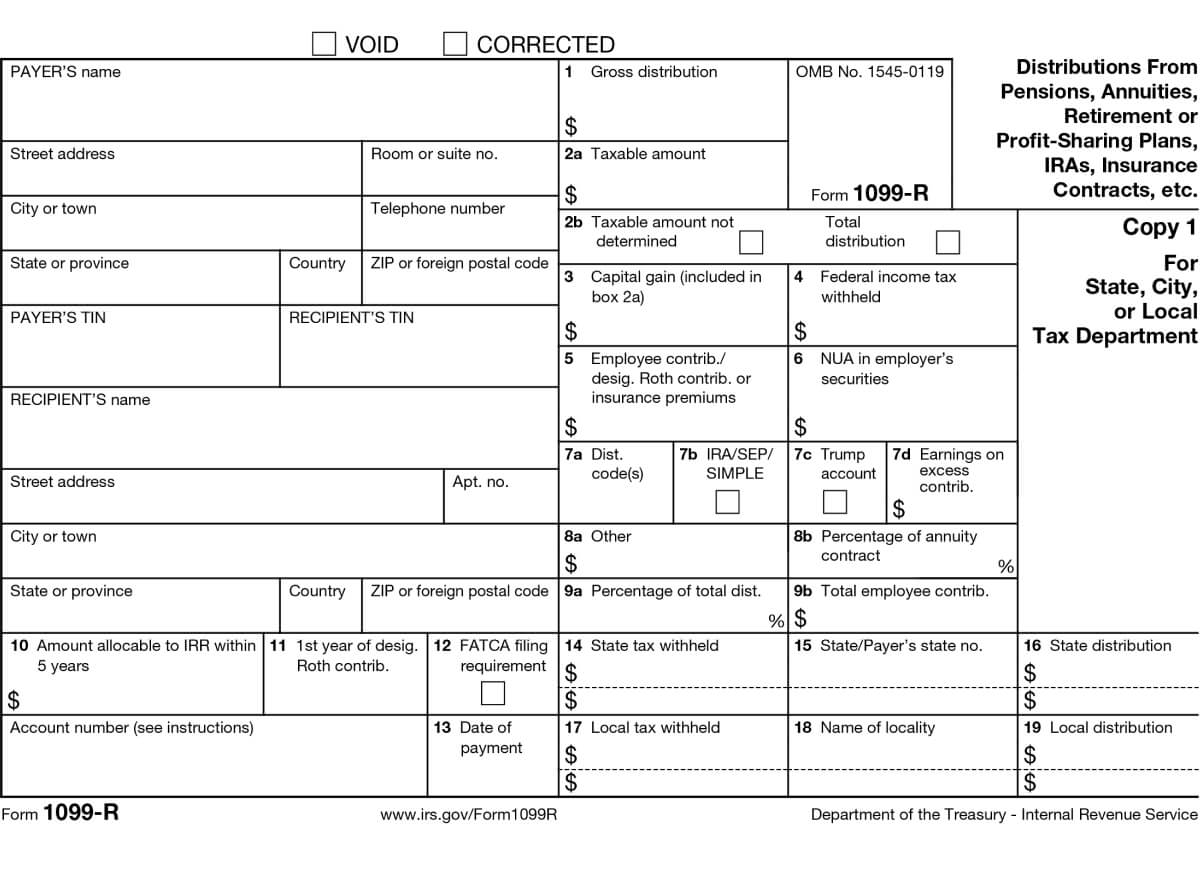
Form 1099-R contains details about your retirement distribution, including the total amount paid to you, any taxable portion of the distribution, and any federal or state income tax withheld. It also includes a distribution code that identifies the type of payment, such as an early withdrawal, normal retirement distribution, or rollover.
What should I do with my 1099-R?
Use the information on Form 1099-R to report retirement income on your federal tax return. The form shows the amount you received from a pension, IRA, annuity, or other retirement plan, along with any taxes already withheld.
Whether you owe taxes on the distribution depends on the type of account and the reason for the withdrawal. Distributions from traditional retirement accounts are generally taxable, while qualified distributions from Roth accounts may be tax-free. Some distributions, such as rollovers to another retirement account, may not be taxable.
What should I do if there’s a mistake on my 1099-R?
If you notice an error on your Form 1099-R, such as an incorrect distribution amount, taxpayer information, or distribution code, contact the financial institution that issued the form as soon as possible. They can review the information and, if necessary, issue a corrected Form 1099-R.
TaxSlayer will walk you through the steps of reporting your retirement income found on Form 1099-R. Just have all your forms, records, and receipts ready, and we will guide you through the rest!