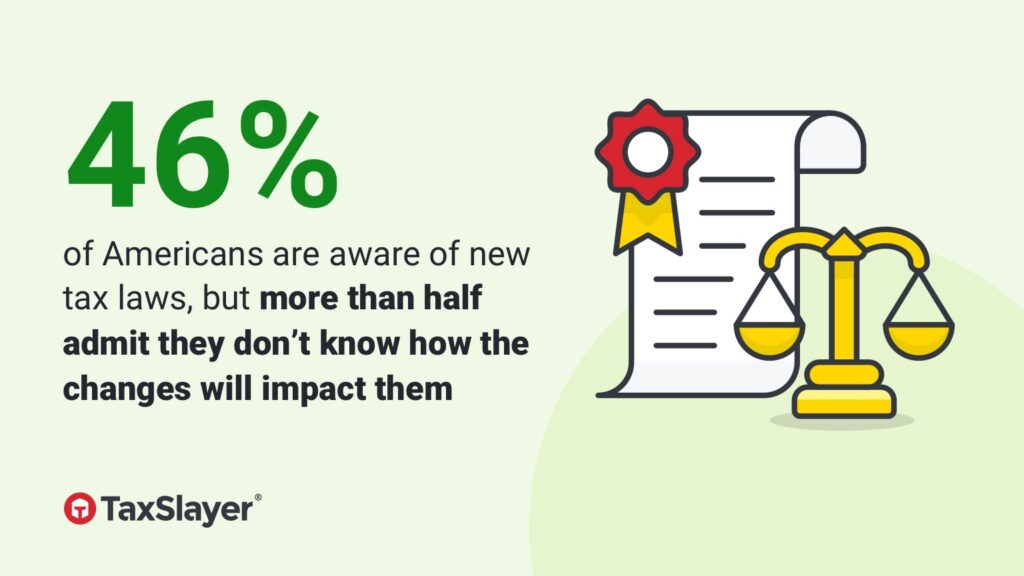
Big tax changes are coming this year, but many Americans aren’t sure what they mean. A recent survey of 2,000 U.S. taxpayers, commissioned by TaxSlayer and conducted by Talker Research, found that while 46% are aware of new tax laws, more than half of those aware admit they don’t know how the changes will impact them. Keep reading for more results from our survey.
Many taxpayers don’t research implications of tax law changes
Most of the survey respondents say they pay attention to tax law updates (84%), but only 55% actively research what those changes mean. In fact, 41% suggested they do little to no research at all.
Despite this, 67% believe that new tax laws and provisions, like those included in the One Big Beautiful Bill (OBBB), will affect them personally, and 20% say they even expect significant impact to their taxes.
When it comes to understanding taxes in general, the respondents’ confidence varied:
- 59% say they have a basic understanding of how income taxes are calculated.
- Just 16% of women and 25% of men feel they understand taxes “very well.”
- Among generations, Gen Z leads the way with 31% reporting a strong understanding – a higher percentage than any other age group.
Respondents to the survey said they were most familiar with deductions for tips and overtime, the increased Child Tax Credit, and the elimination of energy efficiency and EV credits. The enhanced senior deduction was also frequently mentioned as a free response, suggesting it’s top of mind for older taxpayers.
If you’re unsure about what these changes mean for you, TaxSlayer offers tools and resources to help you file confidently.
More than half of Americans expect their taxes and refund amounts to remain the same, despite new tax laws
Even with new laws in place, 52% of respondents expect their tax liability or refund amounts to remain about the same as last year. Interestingly, 63% say they don’t expect to make any financial decisions that could benefit them before the tax law changes take effect.
Other findings include:
- 31% expect to pay more in taxes and 17% expect to pay less in taxes.
- The average expected refund is $1,662, slightly lower than last year’s $1,700.
- 55% believe their refund will be similar to last year, while 18% expect a bigger refund, and 16% expect a smaller one.
Like last year, most people plan to use their refunds to cover essential expenses
Most survey respondents said they plan to use their tax refund for necessities (57%), a significant drop compared to 77% of last year’s respondents. Meanwhile, only 8% are planning to spend their refunds on luxuries this year.
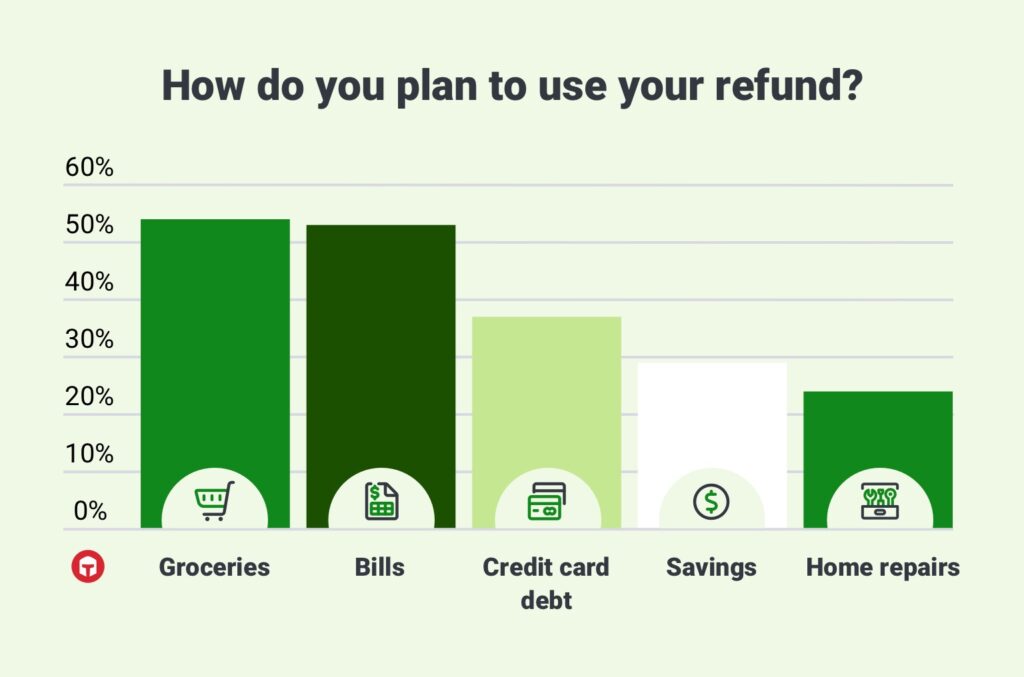
When asked specifically how they plan to use their refunds, here’s what respondents said:
- Groceries and essentials (54%)
- Bills like rent and utilities (53%)
- Paying down credit card debt (37%)
- Savings (29%)
- Home repairs (24%)
Respondents largely say their filing habits will remain consistent this year, with 39% planning to file their returns early, and 58% expecting to file on time for April 15th. This is only a slight shift from last year’s findings (43% planned to file early and 54% planned to file on time). The main reasons for filing early? Getting refunds sooner (60%) and avoiding filing under pressure (46%).
Methodology
Talker Research conducted an online survey of 2,000 U.S. taxpayers with internet access. The survey was commissioned by TaxSlayer and administered by Talker Research between November 13th and November 17th, 2025.
For full details on the research process and methodology, including AAPOR’s Transparency Initiative standards, visit the Talker Research Process and Methodology page.